1. Green Aventurine vs Jade: The Short Answer
Straight up: green aventurine is not jade. They're two unrelated minerals that happen to share a green look, which is why search engines see people typing "is green aventurine jade" all the time.
- Green aventurine is a type of quartz — translucent green, with tiny sparkles (that shimmer has a name: aventurescence, from flecks of mica inside the stone).
- Jade is a family of its own. "Jade" covers two different minerals: nephrite (softer, waxy) and jadeite (denser, the famous Burmese kind).
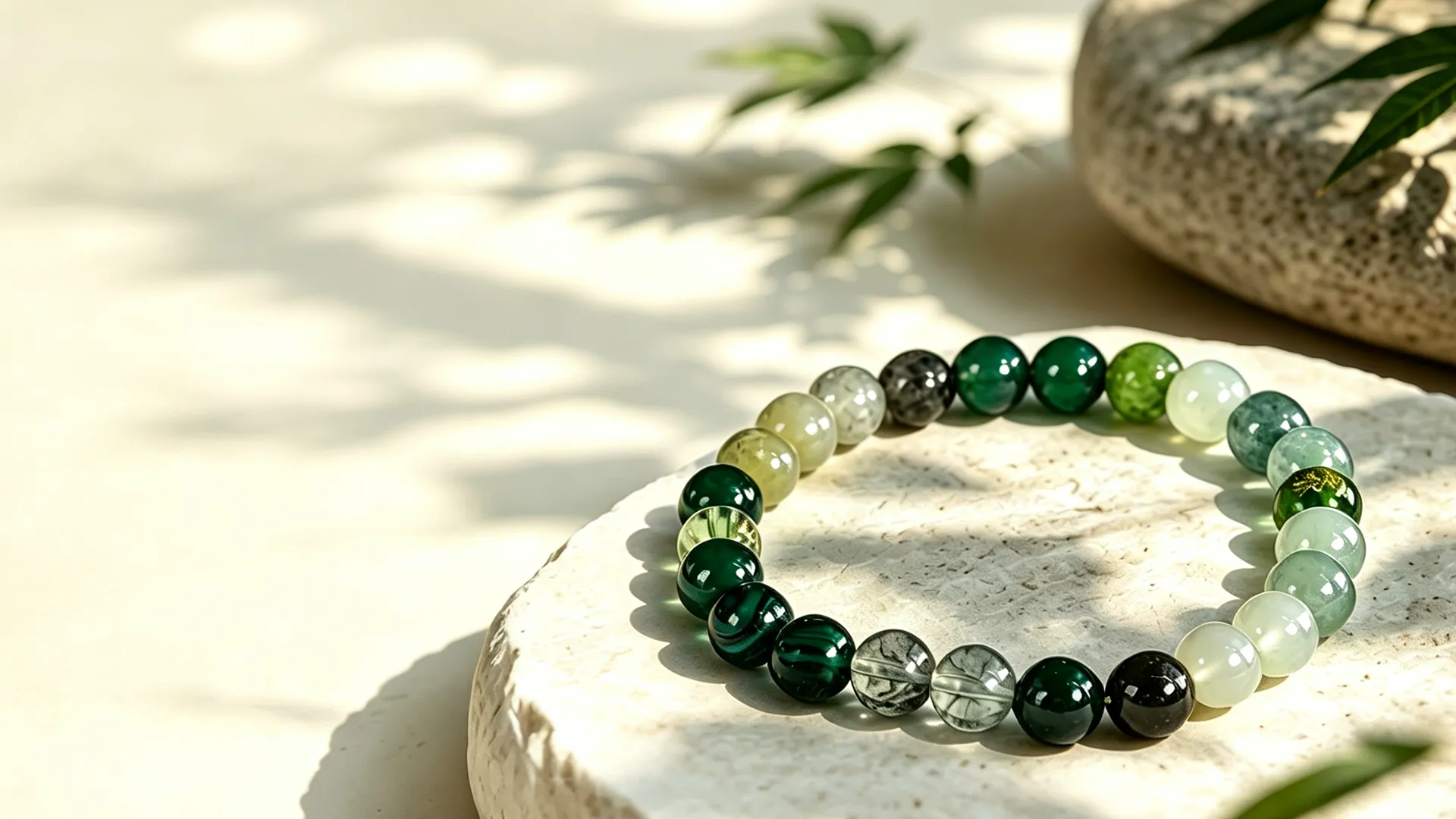
So when someone asks "what's the difference between jade and green aventurine," the one-line answer is: same color family, completely different rock. Both show up constantly in green crystal bracelets — which is great, because each carries a different energy story and a very different price. If you're here for the Green Aventurine bracelet, you're in the right place to compare before you commit.
2. What Is Green Aventurine?
Green aventurine is the friendly, approachable member of the quartz family. Hold it to the light and you'll catch those little glints — that's the mica (usually fuchsite) scattered through the stone, and it's the signature that separates aventurine from plain green glass or dyed stones.
In the Flow of Elements system, green aventurine belongs to the Wood element — the energy of growth, upward movement, and new beginnings. It's our "stone of opportunity": the one people reach for when they're starting something — a job, a project, a chapter. That's also why it pairs naturally with our Green Aventurine meaning & benefits piece and the deeper spiritual meaning read.
Quick facts:
- Family: quartz (silicon dioxide)
- Mohs hardness: ~6.5–7 (tough enough for daily wear)
- Look: translucent green, sparkly, never perfectly uniform
- Element: Wood — growth, opportunity, fresh starts
3. What Is Jade?
Jade is the old soul of the green-stone world. Culturally it's been worn for thousands of years across East Asia as a stone of wisdom, protection, and harmony — we keep that framing as energy and intention, never as a health claim. "Jade" actually covers two distinct minerals (nephrite and jadeite), and the bracelets we carry draw on that lineage in a few different expressions:
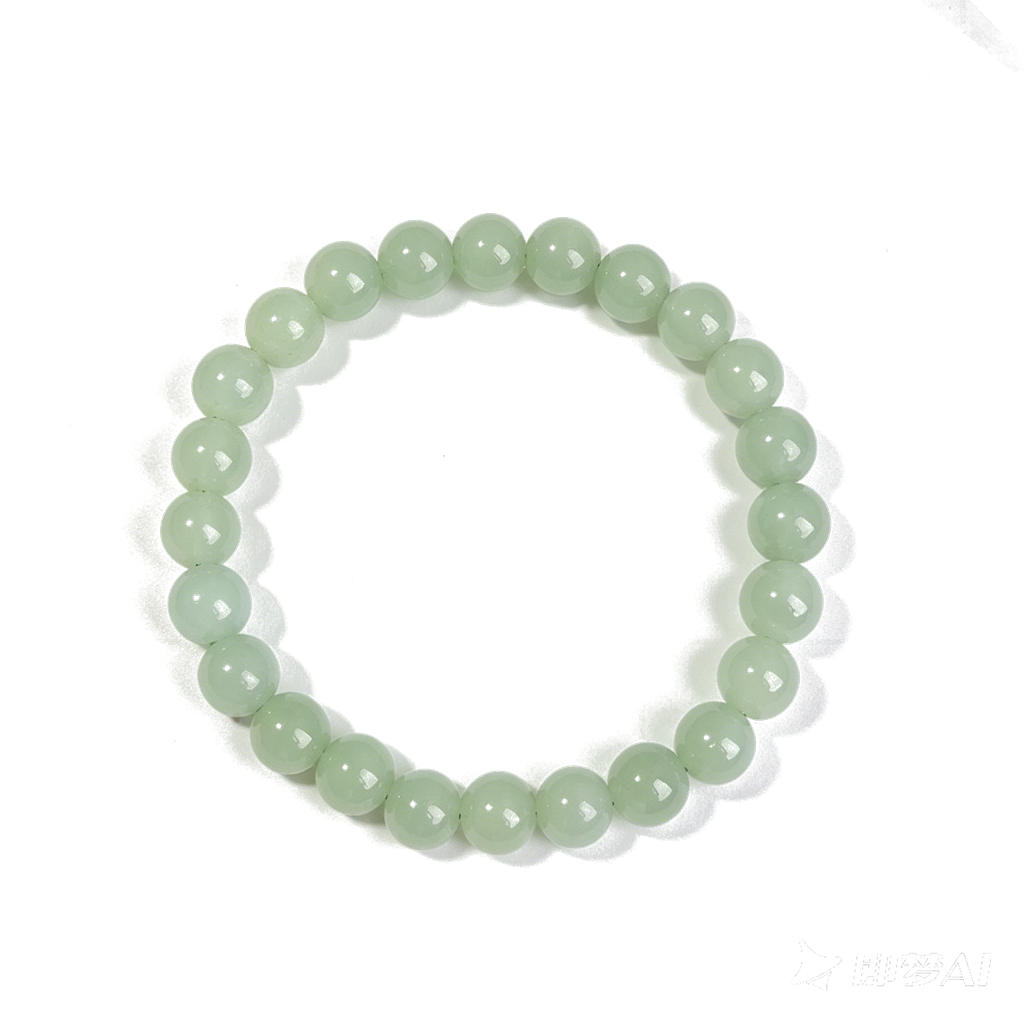
- Burmese Jade — Wood element. The classic deep-green jade line, associated with gentle growth and steady luck.
- New Mountain Jade — Wood element. A brighter, mountain-sourced green, same Wood energy of renewal.
- Golden Silk Jade — Earth element. Warm, golden-veined jade tied to stability and grounding.
- White Jade · Five Elements bracelet — Metal element. A White Jade + Chalcedony + Howlite trio for clarity and focus.
So "jade" isn't one stone — it's a family, and within our lineup it spans three different elements (Wood, Earth, Metal). That's the first thing to know before you compare it to aventurine, which is purely Wood.
4. Side-by-Side Comparison
Green Aventurine | Burmese Jade | New Mountain Jade | Golden Silk Jade | White Jade (Metal) | |
Mineral | Quartz (+ mica) | Nephrite / jadeite | Nephrite line | Nephrite line | Nephrite + Chalcedony + Howlite |
Color | Translucent green, sparkly | Deep even green | Bright mountain green | Green with gold veins | Creamy white + green mix |
Hardness (Mohs) | ~6.5–7 | 6–7 | 6–7 | 6–7 | 6–7 |
Signature look | Glints in the light | Smooth, waxy polish | Bright, clean green | Golden silk threads | Mixed pastel |
Element | Wood | Wood | Wood | Earth | Metal |
Energy & intention | Growth, opportunity | Wisdom, steady luck | Renewal | Grounding, stability | Clarity, focus |
Price feel | Approachable | Higher (real jade) | Mid | Mid–higher | Mid |
The takeaway from the table: aventurine and the Wood jades (Burmese, New Mountain) overlap on intention (growth/renewal) but differ on mineral and price. Golden Silk and White Jade pull toward different elements entirely.
5. How to Tell Green Aventurine from Jade
If you're holding a green bracelet and genuinely can't tell which is which, here are the four field tests people actually use (no lab required):
- The sparkle test. Aventurine has visible glints when you tilt it under light — that's the mica. Jade has a smooth, even, waxy glow with no sparkle. If it twinkles, it's probably aventurine.
- The weight test. Jade (especially jadeite) is denser, so a jade bead feels heavier in the hand than an aventurine bead of the same size.
- The temperature test. Jade stays cool to the touch longer and warms up slowly. Aventurine warms a bit faster.
- The price test. Real jade — particularly Burmese jadeite — commands a noticeably higher price than aventurine. If a "jade" bracelet is suspiciously cheap, it may be aventurine or another green stone.
And if your real question is "how to tell if my green aventurine is real," the sparkle + hardness combo is your friend: real aventurine is genuinely hard (scratches glass) and shows that mica shimmer. We go deeper on authentication in our buyer's guide series — for now, buy from a source that tells you exactly what the stone is.
6. Which One Should You Choose?
Pick by intention, not just by color:
- Choose Green Aventurine if you're after growth, opportunity, and new beginnings — a fresh job, a move, a creative push. It's the Wood stone for momentum. → Green Aventurine bracelet
- Choose Burmese or New Mountain Jade if you want that same Wood energy but prefer the deeper, traditional jade story of wisdom and steady luck. → Burmese Jade · New Mountain Jade
- Choose Golden Silk Jade if you're drawn to Earth energy — grounding, stability, a calmer baseline. → Golden Silk Jade
- Choose White Jade (Metal bracelet) if clarity and focus are what you're after. → Five Elements · Metal
Still torn between elements? That's literally what the Discover Your Element Quiz is for — 60 seconds, no pressure, and it points you to the bracelet that fits your intention instead of guessing.
Liked the comparison? Here's the stone that started the question — one Green Aventurine bracelet, handcrafted, ethically sourced. No two beads alike, so yours is genuinely yours.